
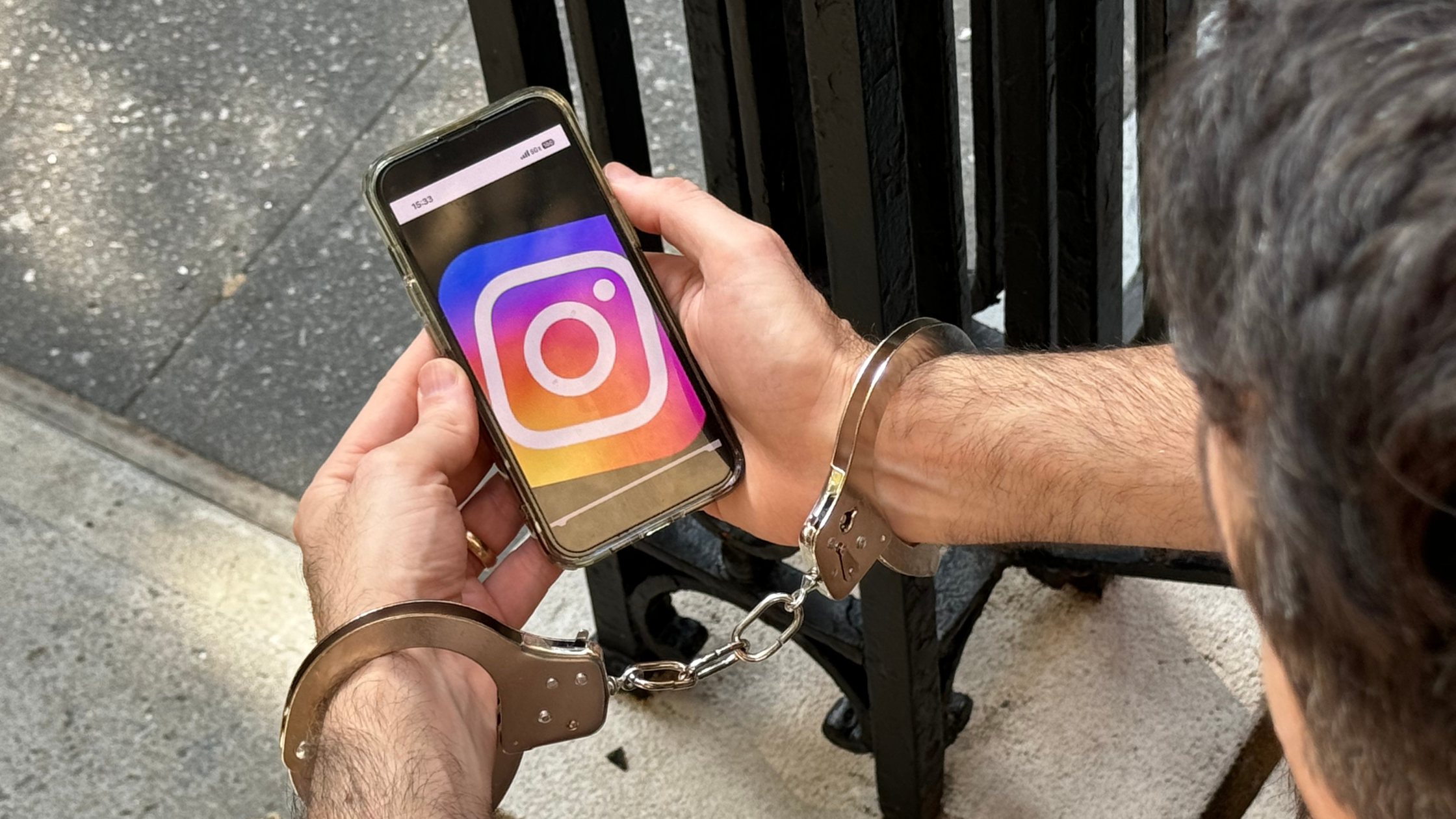
“Instagram, we are never getting back together, time to shake you off….”
The hit TV show “Prison Break” follows the adventures of a guy who willingly gets into prison, only to break out a few months afterward. I willingly got into the social media prison on January 18th, 2008, when I created my first Facebook profile. Since then, I have been sentenced to years of meaningless scrolling, annoying notifications, and a persistent search for the best new social media app. As expected, life in prison has impacted my social life; I had less one-on-one time with my grandma and more screen time during family mealtime. If only I knew then what I know now… Social media addiction comes with a price. Johann Hari, in his book, “Stolen Focus,” painfully describes it-
“Would you like Facebook to physically connect you to your friends more instead of keeping you endlessly scrolling? “
Johann Hari, “Stolen Focus“, Crown, 2022
In other words, social media is not as social as its name implies.
A prison called social media
Social media can be similar to prison in that it restricts your ability to form real social connections. There are strict rules, schedules, and conditions, and often you are told what to read, watch, and even post about. Your presentation on social media aims to conform to community standards, much like wearing a uniform in jail. In both settings, you are constantly monitored, tracked, and evaluated, and with that in mind, it was time for me to attempt to break free.
I carefully planned my prison break. During my research, I came across different detox protocols. For instance, in a study conducted by Coyne et al and published last year in the Behavioral Science journal, thirty-one young adults participated in a two-week digital media detox. During this period, their social media usage was limited to 30 minutes per day. The detox resulted in a 5% increase in daily sleeping time, better perception of wellness, increased life satisfaction, reduced stress levels, and improved supportive relationships.
Therefore, I had high hopes for this detox: more time for studying, less time on the sedentary couch, improved connections with family and friends, and perhaps even better-quality sleep. I used a screen time monitoring tool on my phone to objectively track my detox progress (see Figure 1). Additionally, I filled out a daily questionnaire with subjective, qualitative, and quantitative data, such as my assessment of productivity levels and self-reported sleeping time (see Figure 2)


My prison break – take 1
I started a 5-day social media detox by removing my primary addiction, Instagram. However, I quickly realized that other social media apps were filling the void, and on day 2 I decided to take a drastic move and delete all social media apps – Instagram, Facebook, Twitter, Snapchat, and TikTok. My only digital connection with the outside world was occasional WhatsApp messages from my family and friends. The deep dive in the blue line below reflects this drastic move:

Overall, I increased my sleeping time by 18% and decreased my social media use by 93%. I have added the complete records of my detox results to this blog as a supplement. This result did not come as a surprise, as part of my bedtime ritual included reviewing the best TikTok videos of the day.
Breaking into solitary confinement
The data seems impressive. Yet, as a proud “Swiftie,” this detox came at the worst possible time. Not only was social media filled with reactions to Taylor Swift’s endorsement of the Vice President, but there were also supposedly hilarious memes of her cats and something about eating pets in Ohio. I felt frustrated and disconnected, constantly feeling like I was missing out.
My interactions with friends were also affected – all birthday invites and event notifications had lost their personal touch years ago and were confined to those deleted apps. On the fifth day, I received frantic phone calls from my friends in Costa Rica, wondering about my sudden disappearance. My husband said I got more agitated as the detox progressed. My FOMO skyrocketed.
Detox – completed, now what?
“I just want to say with my whole heart, do whatever it takes to stay true to yourself and true to your art. Turn off social media and safeguard your mental health”
Katy Perry, MTV Network, September 2024
I completely understand the benefits of taking a break from social media, without needing convincing statistics or celebrity speeches. However, I know that I can’t do it alone. It’s not just an individual issue; society as a whole needs to detox from social media. It’s like trying to become a vegan while being surrounded by barbecue restaurants. As a UX/UI designer, it is crucial to recognize our ethical responsibility for what we create or develop for future generations. Aza Raskin, the originator of infinite scrolling in the coding world, emphasized this responsibility.
“One of my biggest learnings as a designer or technologist is —making something easy to use doesn´t mean it is good for humanity.”
Johann Hari, “Stolen Focus“, Crown, 2022
Should I return to social media exile or remove my TikTok routine before bed to sleep better? Well, I am currently in a gray zone. Any thoughts?
