
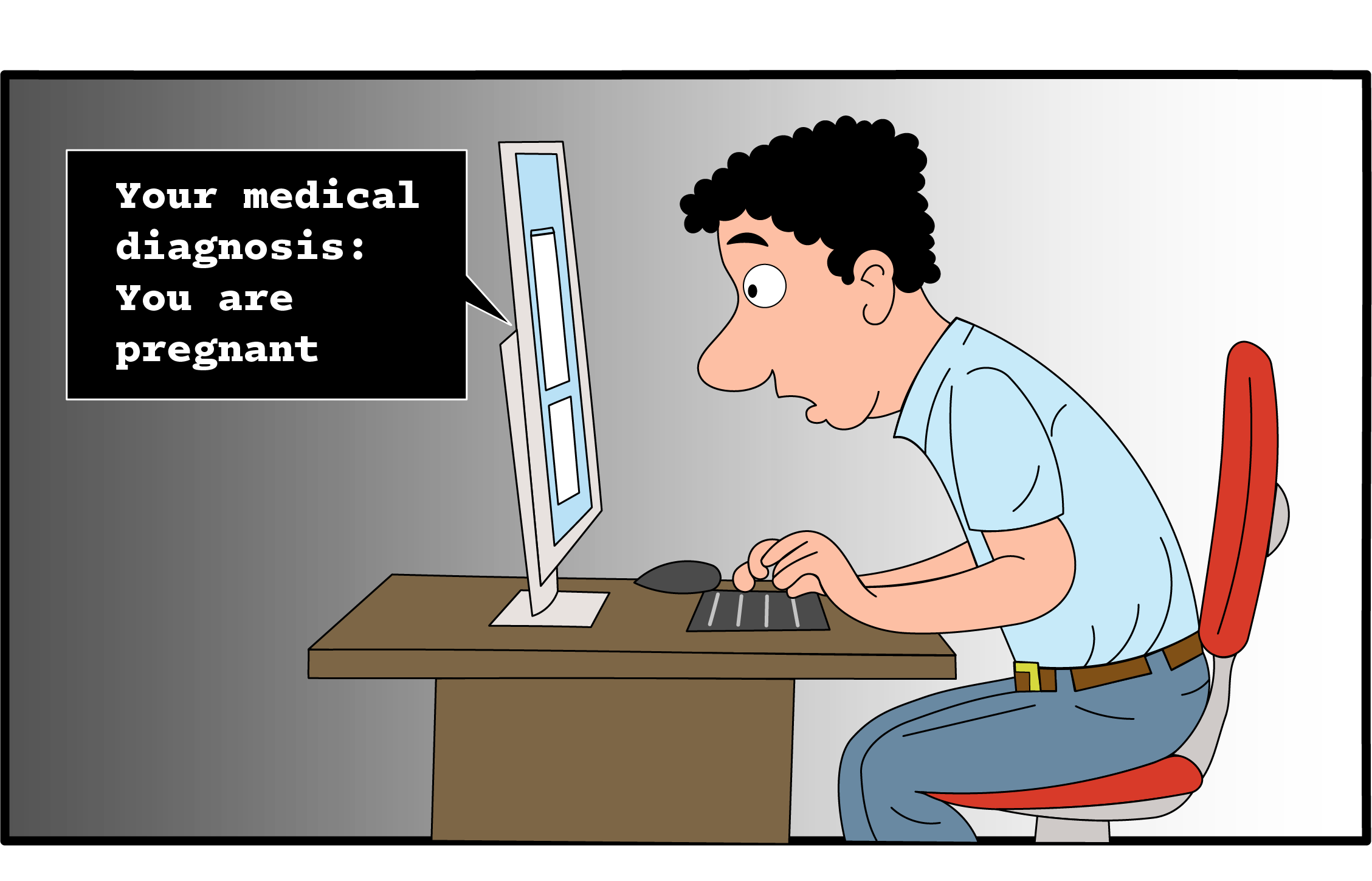
I can’t forget the first time I met ChatGPT. It was love at first sight. I bombarded my new love with twenty personal medical questions, starting with strange pimples on my elbow and ending with possible causes of asymmetrical eyebrows. Interestingly, all the answers included some form of malignancy and lupus. My primary family doctor laughed when I showed him 34 printed pages of my new love’s medical opinions. “Never trust Dr. ChatGPT,” he said. “NEVER!”
ChatGPT – Where did it come from?
The short answer is not from any med school.
The long answer begins in the late 1950s when artificial intelligence (AI) was introduced to the world: a human intelligence exhibited by machines. Later, in the 1980s, AI started to learn from existing databases. In the 2010s, it developed deep learning functions mimicking the human brain. But the real revolution came in 2020, when “generative AI” began to talk back to you and create content.
ChatGPT, the role model of generative AI, uses natural language processing to generate human-like conversational dialogue. It responds to questions and composes various types of written content, including articles, code, emails, and essays.
ChatGPT’s Explosive popularity: Why the hype?
Since ChatGPT was released in November 2022, it has become the fastest-growing consumer application in history. Its popularity comes from several key factors, the most notable being its proficiency in understanding and producing human-like text. When you talk to ChatGPT, the conversation feels both natural and intuitive, resembling a dialogue with another person through the screen.
ChatGPT provides an interactive and engaging way to access information clearly and objectively. For example, you can quickly obtain data within the same chat, avoiding the hassle of opening multiple browser tabs. It is also highly accessible to all Internet users, including my nephew, who uses it for his homework, and certain hypochondriac UX/UI designers with weird pimples on their elbows.
How ChatGPT became Dr. ChatGPT?
ChatGPT is perfectly capable of answering medical questions in a very affirmative and convincing way. Whether those answers are correct or not is a different story.
In a study published this year in the Journal of Pediatric Psychology, parents reviewed medical answers given by ChatGPT and real doctors. They scored ChatGPT’s answers significantly higher and found them more accurate and trustworthy. Moreover, they indicated that they would be more likely to rely on the information provided by ChatGPT than expert doctors.
With ChatGPT, there is no room for embarrassment. You can ask it anything—mental health issues, eating disorders, or STDs. Your secrets are always safe with Dr. ChatGPT; you can even avoid awkward conversations with your primary doctor. Dr. ChatGPT doesn’t care about your health insurance and provides free medical advice to everyone, especially cyberchondriacs. This unique group constantly seeks medical advice and self-diagnoses with various medical conditions, including rare tropical diseases that can lead to red lesions on the elbow.

Why you should never trust Dr. ChatGPT?
Dr. ChaptGPT can provide direct and confidential medical advice, which can be comprehensive at times. All responses carry a persuasive scientific tone and often address urgent inquiries. The service is accessible 24/7 and cost-free. So, why shouldn’t you trust it?
1. Its medical advice is not always true
ChatGPT searches various online sources for answers, but not all are reliable. Some sources lack accurate medical information, and not all are high-quality clinical studies or comprehensive medical reviews. Furthermore, Dr. ChatGPT does not prioritize official guidelines used in clinical practice over random information published in less reputable medical journals.
Several clinical studies aimed to test the accuracy of Dr. ChatGPT’s medical advice. One of them, published in 2023 in the Mayo Clinic Digital Health Journal, showed that only 60% of its answers were accurate. Additionally, 69% of the references provided by Dr. ChatGPT were completely fabricated, even though they appeared genuine. Most fabricated references used the names of authors with previous relevant publications, a title that seemed pertinent, and a credible journal format.
In this study, ChatGPT scored 50 when asked about heart injuries after the COVID-19 vaccine. It also incorrectly recommended steroid injections for children with allergic inflammation of the esophagus and provided incorrect scientific background for its explanation of schizophrenia treatment. Additionally, it warned users about a dangerous Shigella bacteria causing 1.1 million deaths per year, while the accurate number is close to 100,000.
Another study published in 2024 in PLOS ONE challenged ChatGPT with 150 medical case studies, showing a low accuracy of only 49%. They also assessed its cognitive load, meaning the complexity and clarity of its advice. 51% (77 out of 150) of the answers required minimal cognitive effort to process.

ChatGPT, in its current form, does not always provide accurate information. Based on qualitative analysis, it has difficulty interpreting laboratory values and imaging results, and it often overlooks key information relevant to medical questions.
2. What about the physical exam?
Can you truly give medical advice without examining the patient? Listening to their heart, examining their skin tone, and palpating the abdomen all seem crucial and are essential to any medical assessment.
An international survey of 2,684 practicing physicians published in 2017 found that 70% consider physical examinations highly valuable in their medical assessments. The survey indicated that listening to the lungs and palpating the abdomen are the most essential components of the exam.
For example, if you ask Dr. ChatGPT what causes shortness of breath, you’ll receive a lengthy 600-word answer listing twenty possible conditions, including lung cancer and other serious diseases. However, if a physical exam reveals wheezing, this would narrow the possibilities to one option: asthma.
3. Dr. ChatGPT doesn’t really know you
For Dr. ChatGPT, you are just a random user without any past medical history, age, or gender. Ask any doctor, and they will tell you that good medical advice needs to consider your history.
For example, the normal values of cholesterol and blood and stool inflammatory markers depend on your age, gender, and family history of diseases. An LDL cholesterol level of 110 mg/dL, commonly referred to as “bad cholesterol,” may be normal for a young non-smoking man but could be considered very abnormal for others.
Another example relates to drug interactions. Dr. ChatGPT would recommend you to take a medicine that may interact with your existing ones. It doesn’t know you as your family doctor does, so it should not be trusted.
4. Dr. ChatGPT doesn’t know your clinical history
When Doctors “take your history”, they gather critical information through focused questions regarding your chief complaint. when did the chest pain start? What makes it worse? How severe is it on a scale of 1 to 10, with 10 being the worst pain of your life?
These are crucial questions essential for reaching the final medical diagnosis, but Dr. ChatGPT skips them and finds them irrelevant. For example, chest pain that worsens with movement is less likely to originate from a heart problem. Similar pain associated with fever and cough may be related to lung infection. Yet, for Dr. ChatGPT, heart attacks are the first assessment that comes to mind.
Collecting a thorough patient history is vital for effective diagnosis and treatment. Dr. ChatGPT does not collect any history and prefers generic, average responses that suit a broad population.
5. Dr. ChatGPT is not responsible for bad advice
With ChatGPT there is no liability. You can’t sue it for malpractice or harmful medical advice. Using this technology for medical advice carries no responsibility for the advice given.

Why is Dr. ChatGPT so dangerous?
First of all, you may receive a false medical diagnosis. As a result, you might make risky health decisions influenced by misleading medical advice. In many cases, you could also overuse or underuse medications, which may lead to adverse reactions. A false diagnosis is also associated with significant stress and anxiety. Some may stop taking their existing medications, while others may start taking new ones recommended by the infamous new doctor in town.
Second, Dr. ChatGPT may lead you to spend much money on unnecessary treatments and diagnostic tools. One of my friends spent thousands of dollars on ChatGPT’s recommendations – all kinds of herbal remedies and supplements that lack scientific proof of effectiveness.
Lastly, relying on Dr. ChatGPT’s recommendations would inevitably lead to confrontation with your primary doctor. Over time, you may perceive the healthcare system as unreliable or indifferent to your health concerns.
Where do we go from here?
The evidence shows that Dr. ChatGPT’s medical advice is dangerous. Its advice is inaccurate, unsupervised, and associated with adverse outcomes. This highlights the need for action. We need to act against the replacement of medical professionals with AI platforms.
The key is regulations. We need to mark warnings on every ChatGPT answer to medical questions, stating that it is not a real doctor. Its advice may not be entirely accurate. Users should consult a professional regarding their health issues.
Official health agencies should educate the public about the dangers of using AI platforms for health advice. There is plenty of evidence for all TV shows, documentaries, and online commercials that highlight the flaws of Dr. ChatGPT.
Some may suggest that ChatGPT should be limited to adults only. While this measure may seem extreme and impractical, it would save a lot of unnecessary stress and anxiety for cyberchondriac teenagers.
Lastly, efforts should be made to improve AI platforms regarding medical questions. Specifically, there is a need to include adequate references, links to healthcare professionals, and routine monitoring by medical experts.
Conclusion
Would you put your 2-year-old toddler in a daycare managed by taxi drivers? Would you have your plumber fix your broken tablet?
Sometimes, we just need to rely on professionals to do the job. Dr. ChatGPT, or should I just say ChatGPT, is not a doctor, not a professional, and not in any way suitable for giving medical advice.
Do not trust Dr. ChatGPT!
References
- Elder, A. T., McManus, I. C., Patrick, A., Nair, K., Vaughan, L., & Dacre, J. (2017). The value of the physical examination in clinical practice: an international survey. Clinical Medicine, 17(6), 490–498. https://doi.org/10.7861/clinmedicine.17-6-490
- Gravel, J., D’Amours-Gravel, M., & Esli Osmanlliu. (2023). Learning to Fake It: Limited Responses and Fabricated References Provided by ChatGPT for Medical Questions. Mayo Clinic Proceedings: Digital Health, 1(3), 226–234. https://doi.org/10.1016/j.mcpdig.2023.05.004
- Hadi, A., Tran, E., Nagarajan, B., & Kirpalani, A. (2024). Evaluation of ChatGPT as a diagnostic tool for medical learners and clinicians. PLoS ONE, 19(7). https://doi.org/10.1371/journal.pone.0307383
- International Business Machines Corporation. (2024). What is Artificial Intelligence (AI)? | IBM. Www.ibm.com. https://www.ibm.com/topics/artificial-intelligence?mhsrc=ibmsearch_a&mhq=artificial%20intelligence
- Leslie-Miller, C. J., Simon, S. L., Dean, K., Mokhallati, N., & Cushing, C. C. (2024). The critical need for expert oversight of ChatGPT: Prompt engineering for safeguarding child healthcare information. Journal of Pediatric Psychology. https://doi.org/10.1093/jpepsy/jsae075
