
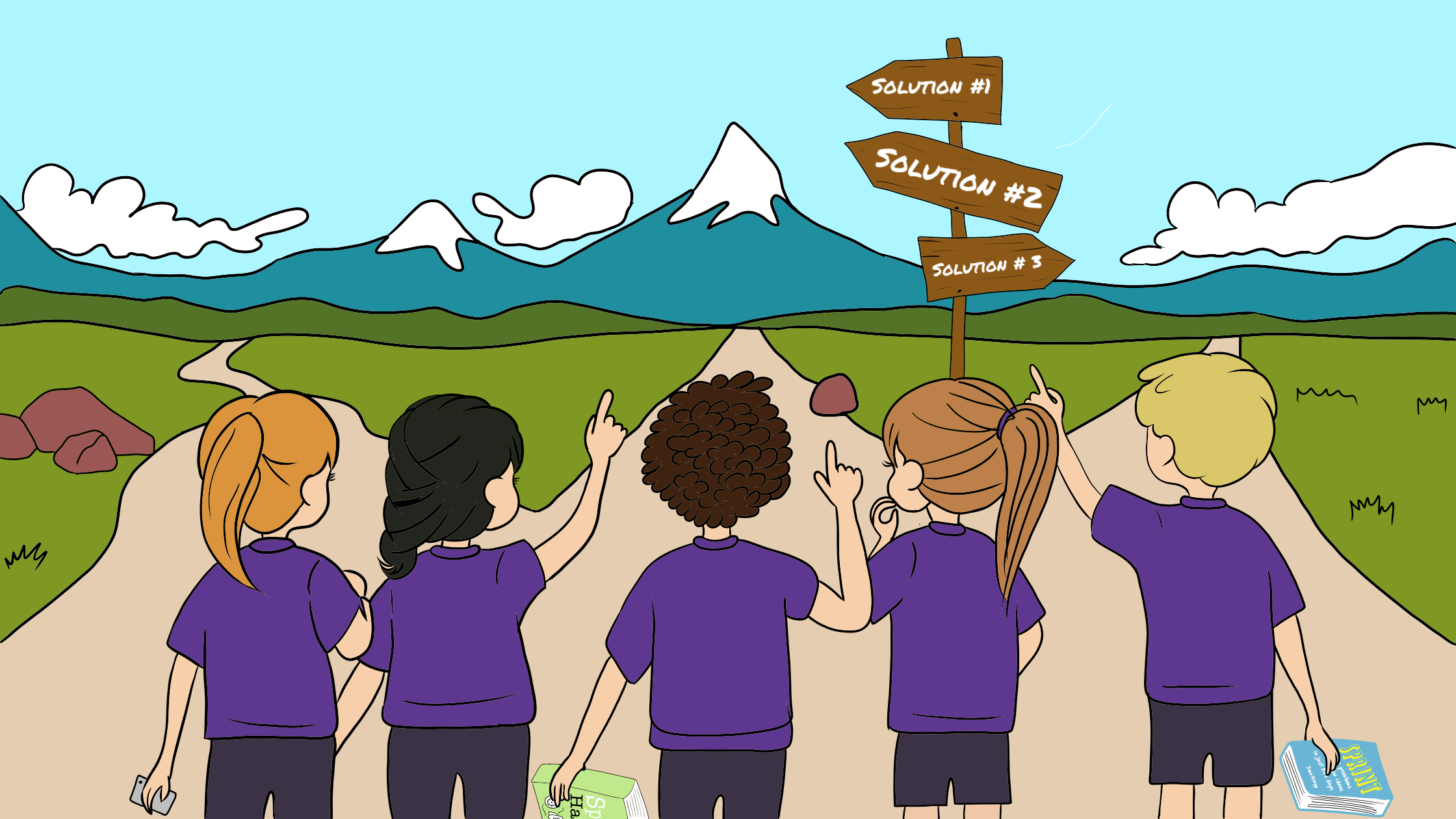
Ralph Waldo Emerson, an American philosopher, once said, “ Once you make a decision, the universe conspires to make it happen.” This week, the universe included a group of five talented “purple” people in a design sprint, making groundbreaking decisions toward storyboarding a financial map for Generation Z.
Well, I might have gone too far with groundbreaking. In fact, grouping five highly opinionated individuals and asking them to make a decision was not an easy task. While in this sprint, we must make decisions and formulate a clear plan for the next steps, the process of doing so is itself a fascinating journey.
Making Decisions
“Instead of meandering, your team’s conversations will follow a script.”
Jake Knapp, Sprint: How to Solve Big Problems and Test New Ideas in Just Five Days.
Making decisions is all about selecting the strongest ideas for our prototyping. Rather than engaging in endless arguments, our team follows a structured and fair process to review and vote on each sketch, while keeping the creators anonymous. This method ensures objectivity and directs attention to the quality of the ideas rather than their origins.
Professor Pattie Belle Hastings’s book The Sprint Handbook provides an excellent guide through this detailed process. Let’s delve into each step of the decision-making process.
Display All Solutions (“Art Museum”)
Each solution sketch is anonymously displayed on the wall, resembling a gallery of ideas. Without any names or explanations needed, the sketches stand alone, conveying their essence.

Silent Critique
Our team members quietly walk through and study the sketches. They write quick notes about what stands out, what’s strong, or what raises questions.

Dot Voting
“The sticky stuff isn’t a gimmick. The dot stickers let us form and express our opinions without lengthy debate, and the sticky notes allow us to record big ideas without relying on our short-term memory.”
Jake Knapp, Sprint: How to Solve Big Problems and Test New Ideas in Just Five Days.
Everyone receives a set number of dot stickers and places them on the parts of sketches they find interesting or compelling. This creates a kind of “sticky heat map” that displays which ideas are attracting attention.
Straw poll
This step offers a quick way for the entire team to express their opinions. These votes are non-binding, as they provide some guidance to the decision-makers. Before the final decision, each person casts one significant vote for their top choice.

Decider Makes the Final Call
The Decider assesses the feedback and decides which idea or combination of ideas the team will pursue for prototyping.
All those steps show how a clever structure can beat a messy discussion. By voting anonymously and focusing, the team makes a confident decision, not just the loudest or most popular one. This saves time and energy while ensuring the best ideas rise to the top.

Rumble:
Now, let’s imagine our team has come up with two or three really good ideas during our Design Sprint, and now we’re at an impasse. Everyone has a favorite, no one agrees, and honestly, any of them could work. So… where do we go from here?
We don’t choose. We RUMBLE.
“Rumble” is the Sprint team’s term for a smart move: instead of choosing one idea, we test the best ones against each other in a friendly competition and let real users help decide. This means on Prototype Day, we might create more than one version of our solution. And on Test Day, we show different versions to different users, and then we can see which one works better. For example, we might have two ways to design a checkout page, or two concepts for how someone signs up for our app, or even two very different takes on the entire product.
Participating in a Rumble doesn’t always make sense. Sometimes, there are many winners, but they all come together.
“If you think you can combine your winning sketches into one product, don’t bother with Rumble. Instead, put them together into your best shot at solving the problem.”
Jake Knapp, Sprint: How to Solve Big Problems and Test New Ideas in Just Five Days.
In other cases, by conducting a “Rumble,” we avoid wasting time arguing in the room and instead receive clear, quick feedback from the people who matter most: our customers.
After a day of generating various potential solutions, our team transitions from possibilities to a single, confident path. That’s what the “Decide” step is all about: cutting through the noise and aligning on the most promising idea using a structured, fair process. No endless debates. No guesswork. Just thoughtful decisions based on the evidence gathered so far.
Storyboard
But deciding isn’t enough — we must bring the idea to life. That’s where the “Storyboard” step comes into play. Once our team has picked the winning idea (or ideas), it’s time to get serious about the details. Think of it as making a scene-by-scene plan for our prototype, like a comic strip showing what our test user will experience on Test Day.
In the “Storyboard” step, our team creates a detailed blueprint of how our solution operates from the user’s perspective. We outline the first click, the second screen, the choices they will encounter, and what happens next.
We start with a large whiteboard, create several frame grids (like a movie storyboard), and collaboratively illustrate each key moment of the user journey. We don’t need to be artists — just clear and specific enough to convey what’s happening. Then our team debates, adjusts, and refines the story until we all agree: Yes — this is the experience we want to test.

The storyboard keeps everyone on the same page. It minimizes misunderstandings, streamlines the prototyping process, and ensures that our testing feels authentic and targeted. Without a storyboard, we risk developing something that confuses users or fails to measure what we truly want to understand.
Conclusion
The second day of the Design Sprint marks a turning point—a day characterized by clarity, focus, and momentum. After exploring various potential solutions, our team transitions from possibilities to a clear and confident direction. This highlights the real impact of a design sprint, particularly when it involves authentic decision-making, as it can effectively reveal the right path. The magic lies in methodically turning a long, sometimes exhaustive process into a short and efficient step. By the end of the day, we can make an important decision and turn it into a detailed, step-by-step action plan, setting the stage for our next move: Prototyping with a proposal.
