

“Don’t find customers for your products, find products for your customers.”
Seth Godin
Have you ever noticed that what we buy, use, or learn today no longer comes in boxes? Digital music albums, online courses, eBooks, and video streaming platforms — these digital creations are everywhere. And the best part is that most of them are made by ordinary people with an idea and a laptop.
That’s what makes the digital product market so exciting. We don’t need a warehouse, shipping labels, or huge investments to get started. We only need something valuable to share—knowledge, creativity, or even just a clever shortcut—and suddenly, we have something that can exist online and be sold repeatedly. However, entering this world can feel a bit overwhelming. Where do we even begin? How do we know if people will care about what we’re making? And is it worth our time to try?
Join me as I share my journey in this blog, where I discuss finding my niche, identifying gaps in the digital market, exploring different product ideas, and finally understanding my target audience and validating my product.
Finding my niche
It’s no secret that my true passion lies in Web development and design, and I am eager to explore it further. Recently, I started building websites from scratch using CMS (Content Management System) platforms platforms like WordPress.org, Wix, and Framer. One of my latest projects is a fully functional e-commerce site for a well-known restaurant in Costa Rica. With experience in retail and finance, I am very motivated to launch a micro business in the digital product sector. This project could serve as a crucial first step toward establishing a career as a freelancer in this field, particularly in creating website templates.

Based on my creative interests and career goals, I am exploring digital products related to website development and design. I believe that nothing is more fulfilling than creating something from scratch, especially successful and well-functioning websites.
The field of website development and design covers a range of digital products, including website templates, developer planners, tutorials for both experienced developers and beginners, among others. Using the following mind map, I outlined the main digital products of my interest in the subsequent spreadsheet. While personal interest influenced my decision, I narrowed the list based on market demands identified through my market research.
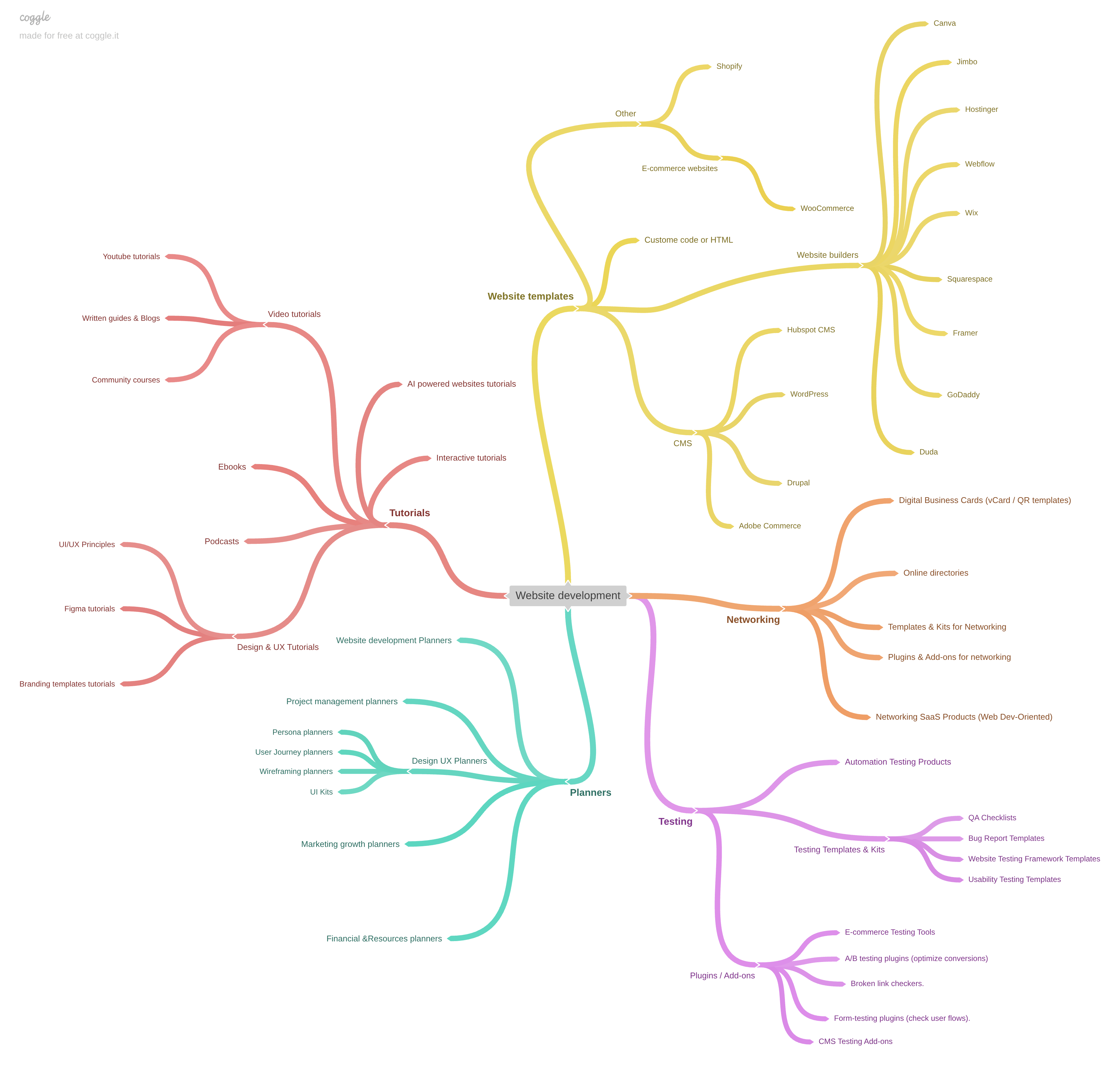
Potential digital products
Digital product 1: website template for Framer builder tool for a small culinary business

Website templates are essential tools in any developer’s kit. They provide a solid structure for a website, and if well customized, they do not hinder a developer’s creativity and originality. Although many developer platforms are filled with numerous templates, my market research has identified a significant gap in the Framer builder platform. Since restaurants and coffee shops have a strong demand for an online presence, I recommend creating a template specifically for this purpose.
This will be a pre-designed website template created in Framer, a visual, no-code web design tool. This digital product aims to establish an online presence for a culinary business as its digital front door. The design will include pre-designed page layouts, visuals styles, interactions, a menu gallery, a photo gallery, and modules tailored to showcase food-focused offerings.
This website template is aimed at small restaurants, cafés, bakeries, or catering services that want an attractive online presence. The template could also be useful for culinary professionals looking to showcase their recipes and food content. Additionally, this product could primarily appeal to web developers or design startups seeking to quickly launch a website for a client with a professional look and functional pages.
Digital product 2: Figma website template kit for wireframes

A design template is always in high demand, and many are available for purchase. Here, I will be entering a saturated market, but my market research shows that there is always room for an original and creative design product. Some wireframe templates lack interactivity or animation (such as hover and active states). These are potential uses for more realistic prototypes.
A Figma wireframe template kit is a ready-made collection of user interface components and layouts designed for quickly sketching web or app interfaces. It usually includes frames, buttons, navigation bars, forms, placeholders, and basic interaction patterns. These kits are meant for “Low- to mid-fidelity wireframing,” helping teams organize user flows and information architecture before advancing to full design or development.
My proposed digital product is specifically targeting website designers, particularly those looking to streamline the ideation and prototyping process. I target design teams, freelancers or even students looking to kickstart projects quickly wothout building standard components from strach. Lastly, product managers and business analysts require visual clarity on structure and flow early in a project, specifically looking for these key product elements.
Digital product 3: E-book – “How to build a website on WordPress for beginners”

My market research shows that many WordPress digital products lack installation tutorials or clear instructions. Novice developers often rely on external video tutorials and AI-guided instructions for help. Additionally, there are only a few easy-to-read, comprehensive guides available that guide new users through each step of creating a WordPress website. Also, there is a lack of this material in Spanish.
My proposed product is a handbook designed to teach complete beginners how to build a website with WordPress from scratch. It guides readers through the key steps, from purchasing a domain to launching the site. Additionally, it includes chapters tailored to different website types: Business and professional sites, E-commerce, content and media, Education and learning, and Non-profit and Cause websites.
This eBook targets beginners interested in web development without prior coding experience. It may also appeal to small business owners, bloggers, and entrepreneurs seeking an affordable way to build their own website.
Who is my audience?
Audience 1 – Novice web designers
People who lack any real technical experience and need to build a simple website for their work or personal use. This audience struggles with the basics of coding, including HTML and JavaScript. Therefore, they are limited to using existing website templates. Additionally, they are still unsure about UX/UI principles, accessibility, and SEO, which makes it difficult for websites to look professional, accurate, and modern.
The goal of this audience is to learn the essentials, the popular design and development tools such as Framer, WordPress, and Figma. These tools are often used to create websites, starting from templates and then customizing layout, colors, typography, and content. Many users seek pre-made solutions tailored to specific needs, aiming to find options that match their requirements.
Audience 2 – Experienced web developers
Here, I focus on an audience that has built websites in the past and is used to purchasing design and web templates online. They work in this field and provide digital solutions for clients for a fee.
For example, an experienced web developer currently working with many clients, trying to meet impossible deadlines, and willing to pay a fee for an attractive, original design template to complete the job faster and deliver it by tomorrow. Another example is a developer in the culinary business who is mainly interested in the Framer development tool because of its many advantages and needs a website template he can customize based on his clients’ needs.
Preliminary validation
After researching my field of website development and design and brainstorming potential products, I sought validation by consulting three colleagues—a web developer, my cousin, and my nephew—via phone calls and Zoom meetings. I reviewed my mind map with them and took notes of their feedback.
They positively endorsed the Framer template, favoring a less saturated field. Some warned me that competing e-books could pose challenges unless I add new value, such as a Spanish version. My checklist planner was unpopular, to say the least, or as my nephew said, “I would never pay money for this.” Their insights helped me refine my product ideas, narrowing the list from eight to three, which I plan to revisit next week.
Conclusion
My quick list of digital products includes a website template, a Figma design kit, and an e-book—distinct products aimed at the same audience. I believe there’s room for all three in the market and that I have the necessary skills to develop them.
Given my personal interests and the potential for higher earnings, I am more inclined to create the templates rather than focus on writing the e-book. Overall, I am happy with all three products and excited to share my journey as I start exploring the digital product market in my upcoming blogs.
Stay tuned!
Enclosed is my complete report on my research journey in the digital product market.
