
“You cannot make progress without making decisions.”
Jim Rohn
One thing I realized in the early stages of developing a digital product is that its success depends on careful and thoughtful decision-making. This is a crucial part throughout the whole process, from coming up with ideas for products, narrowing down the options, to choosing the right market for selling it. The spectrum of decision-making ranges from trusting your gut on one end to slow, analytical thinking on the other. This week, I examined where I fall on this spectrum while making an important decision about my chosen digital product.
Coming up with ideas
My first step in the digital product development process was conducting market research in my area of interest—website development and design. I identified gaps and deficiencies in the market, such as the lack of Framer website templates and user-friendly WordPress tutorials. Vaguely, I began to imagine what kind of products I could develop and bring to the table.
Developing a mind map helped me explore more ideas, think them through, organize my thoughts in specific areas, and visualize them into something more logical and substantial. This step helped me develop a long list of more realistic products, which I summarized in a dedicated spreadsheet.
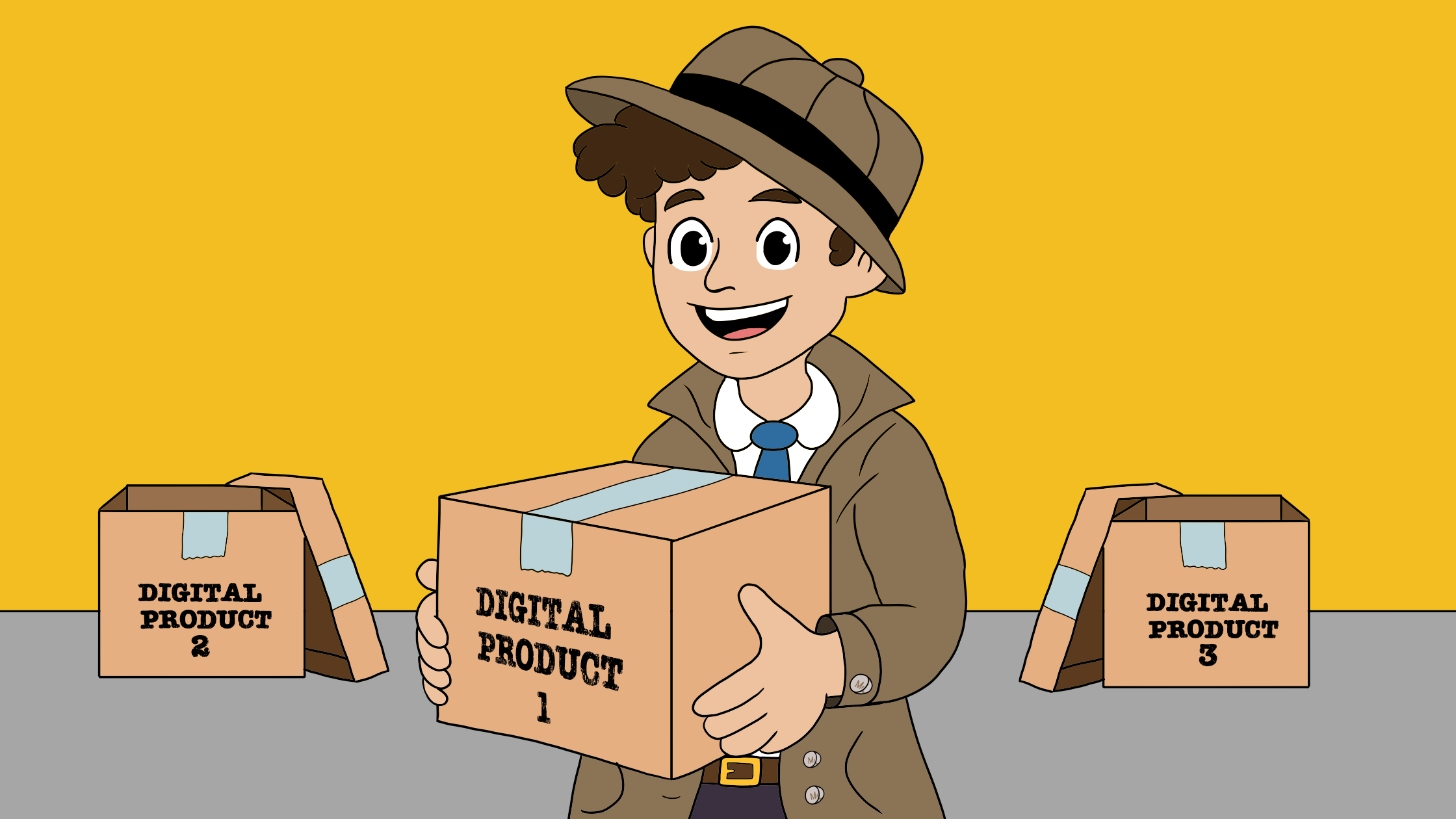
After conducting more market research and obtaining preliminary validation from small-scale usability studies, I narrowed the list down to three final products: an E-book for WordPress website building, a Figma website template kit for wireframes, and a website template for Framer.
Why those three?
First, I noticed a lack of clear guides for building a website from scratch with WordPress. This becomes evident when trying to create specific site categories like E-commerce, content and media, education and learning, and non-profit sites. An e-book with an easy-to-read guide on this subject would target entrepreneurs, small business owners, and freelancers aiming to build websites with WordPress.
Second, I identified a lucrative market opportunity by developing a Figma wireframe template kit. Specifically, a ready-made collection of user interface components and layouts designed for quick sketching of web or app interfaces. My kit would include frames, buttons, navigation bars, forms, placeholders, and basic interaction patterns. The primary target audience is UX/UI designers and web designers.
Finally, my market research showed that Framer website builder has very few templates compared to WordPress, Wix, and other developers. Since the culinary industry is the most “desperate” for an online presence, I decided to create an easy-to-customize culinary website template. I target entrepreneurs, freelancers, web developers, and tech-savvy people looking for a compelling template for the culinary industry (café, restaurant, or coffee shop).
While all three of these products appeal to me, they differ in their competitive advantages over existing market options, potential margins and revenues, and the need for advanced marketing strategies. Therefore, narrowing this list to a single final product requires much more work.
Pitching my ideas
Sharing my ideas with my colleagues seems to be the best next step. I aimed to present the three products to help decide on the most suitable idea to pursue. Additionally, this provides a great opportunity to showcase my presentation skills to a prospective employer.
For my presentation, I created an engaging animated concept where I showcased my three ideas in a digital warehouse setting. Along with a clear description of the products, I specifically aimed to share two key features with the audience that could influence their constructive feedback.
The financial aspects: I examined each idea to estimate potential revenue, considering costs, possible prices, sales strategies, and anticipated annual sales under both optimistic and pessimistic scenarios.
The investment value: For each product, I concluded by explaining why it is worth investing in, emphasizing the unique strengths of each possible product.
Feedback
I shared the pitching videos with my classmates and three other potential customers who helped me with the preliminary usability studies.

Many reviewers favored the two template products, indicating that they are in high demand and would be a good investment overall. Three reviewers stated that writing an e-book is time-consuming, exceeding the allocated three weeks for the task. This feedback easily helped me narrow the list from three to two.
The feedback I received did not favor one template over the other, and I considered additional factors in this decision-making process:
- Money, Money, Money: According to my market research, the Framer website template generates significantly higher revenue than the Figma one (annual revenue of $4,740-$14,220 compared to $1,800-$5,400).
- My skills: Since I come from the culinary industry and recently built a website from scratch for a small restaurant, I believe creating a Framer website template is within my area of expertise.
- Personal passion and interest: I have a strong passion for the importance of online presence in the culinary industry.
I considered all the factors above and decided to revisit the idea of using a Framer website template. When I discussed it again with one of the reviewers, he made an interesting point – since I recently built a culinary website, would using a template significantly speed up and improve the process? Is it cost-effective?
I believe that the website template I develop should add real value and not just rely on the lack of existing templates in Framer. I need to create an easy-to-use template with a wide range of customization options that won’t delay the development process. I plan to think more about this product and revisit the competitive offerings on other platforms.
The final chosen product
My final chosen product is a Framer website template for a small restaurant or coffee shop. I remember the struggles and the pain I faced when I built a website for my restaurant ten years ago. While my business was unique and special, with no prior knowledge of coding languages, I was forced to use a very non-customization-friendly WIX environment. My overall online presence conflicted significantly with the uniqueness of my restaurant.
I imagine my future Framer website template as one of the top sellers in the market. It will help small business owners, entrepreneurs, or freelance website developers easily launch a dedicated culinary site with a strong online presence. In addition, this project could serve as a stepping stone toward building a career as a freelancer in this field or as a bridge to create collaborations or job opportunities in my future career.
